
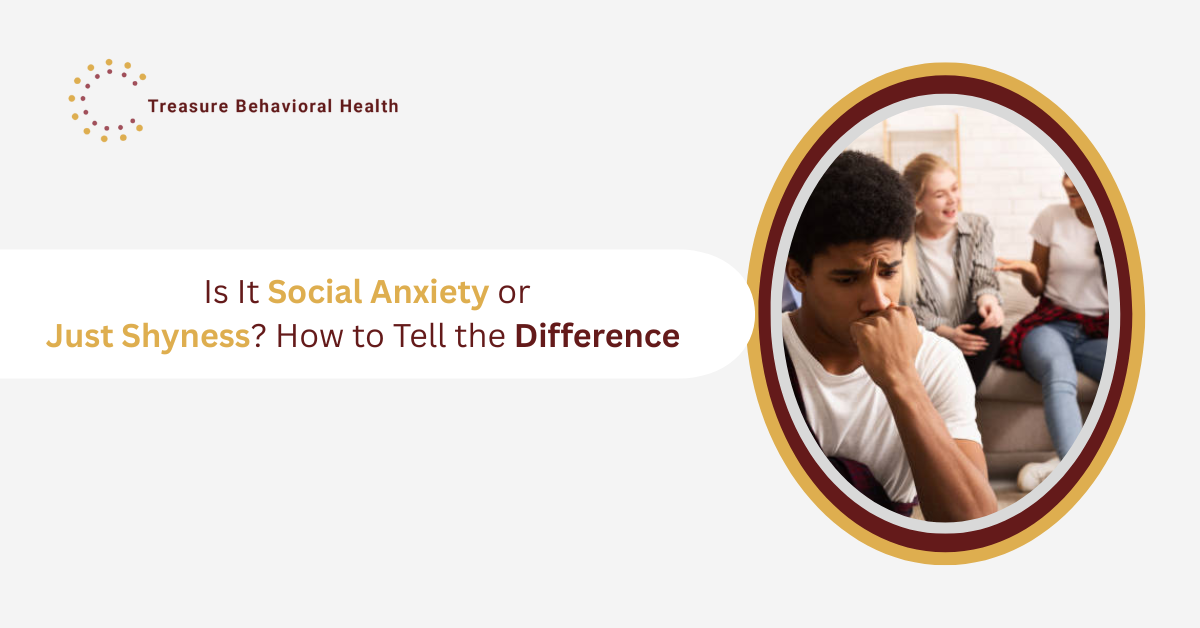
Imagine a family get-together or a work meeting where you don’t want to go, your heart is racing, or you want to stay out of the spotlight. You might be wondering whether this is just how you are or something worse.
Understanding social anxiety vs shyness might help you figure out whether these feelings are just a regular part of being shy or something more serious. By putting them side by side, we can learn the main differences between social anxiety and shyness, how to tell them apart, and how to feel more at ease in everyday social situations.
Understanding Shyness: A Natural Personality Trait
Many of us are naturally shy. It’s not a health problem or a flaw; it’s just a little nervousness when you meet new people. Instead of thinking of it as a problem that gets in the way of your daily life, think of it as a part of who you are.
How Shyness Evolves
The good news is that shyness usually fades over time. As you get used to something, like talking to your neighbors or joining a hobby club, that first fear goes away. Being shy doesn’t usually keep you from getting a job or making good friends.
The Benefits of Being Shy
There are some good things about this type of person. If you’re shy, you might pay more attention to things, which means you pick up on social cues that other people miss. This can help you build stronger, more meaningful relationships where quality is more important than quantity.
Common Signs of Shyness
This is what shyness usually looks like in real life:
- Getting used to it: At first, you might feel shy in big groups, but as you get used to them, you’ll start to laugh and enjoy them.
- Enjoying small groups: You probably like small, quiet get-togethers more than big, loud parties that make you feel scared.
- No physical panic: Unlike social anxiety, shyness is a mental pause, not a physical reaction like a beating heart or clammy hands.
What Is Social Anxiety Disorder? Beyond Everyday Awkwardness
Social anxiety disorder extends past just the occasional nervousness; it is a known mental health condition, and it is a massive, constant dread of being observed or judged. As stated by DSM-5, this disorder is characterized by a significant fear or anxiety in relation to social situations when the person is subjected to potential judgment of others.
It is not just a fear of crowds; it is a fear that engulfs the person, making his daily communication seem like a high-performance show. This condition may significantly affect everyday activities, leading to isolation and low self-esteem.
Causes of Social Anxiety
The causes of this condition vary, but in most cases, it is a combination of biological and environmental influences. It can be due to brain chemistry imbalances, previous traumatic events, or genetics. It is a valid state grounded in actual physiological and psychological triggers.
Symptoms and Impact on Daily Life
Social anxiety may have a significant impact, which may result in isolation or lack of progression in their careers. Key symptoms include:
- Constant Anxiety: Uncontrolled anxiety, which persists before, at the time, and after social contact.
- Physiological Reactions: This includes involuntary reactions such as shaking, blushing, and nausea when interacting.
- Life Interference: Escape from routine actions may cause strain in establishing relationships and limit opportunities for self-fulfillment.
Key Differences Between Social Anxiety and Shyness
To see the distinction between the two, shyness vs. social anxiety, one can look at the intensity and the power of the feelings. Shyness is a temporary, mild personality trait that can even improve empathy in some cases. Social anxiety, in its turn, is a lasting disorder that is associated with extreme fear that interferes with everyday life and can only be supported.
Comparison: Shyness vs. Social Anxiety Disorder
| Aspect | Shyness | Social Anxiety |
| Intensity | Mild discomfort that fades quickly. | Intense, persistent fear. |
| Impact | Minimal disruption to routine. | Avoidance of work and relationships. |
| Duration | Temporary and situational. | Chronic and pervasive. |
| Symptoms | Rare or none. | Frequent (e.g., sweating, rapid heartbeat). |
Recognizing the Signs: When Shyness Crosses into Social Anxiety Territory
If you are confused whether it is just shyness or social anxiety, a gentle self-check can be helpful. Think of it as getting to know your own habits. Shyness usually goes away quickly, but social anxiety can last a long time and make you feel bad all the time.
Here are some critical signs that you might have social anxiety:
- Overthinking your feelings: You keep replaying conversations in your head and being very hard on yourself, like when you can’t stop thinking about what you said at a parent-teacher conference.
- Avoidance: You turn down invitations to avoid being embarrassed, even if it means missing out on coffee dates with friends.
- Physical Reactions: You might feel things like a dry mouth or dizziness in low-stakes situations, like a quick chat at the store.
- Withdrawal in Youth: If a child or teen doesn’t want to go to playdates or hesitate to participate in activities, hides behind their parents, they may have social anxiety.
Social anxiety also comes with normal worry or mood swings. The best way to get full, helpful treatment without feeling overwhelmed is to notice these signs early on.
Common Triggers and Risk Factors
The triggers of social anxiety may occur in the most basic day-to-day situations:
- A simple conversation can become an overwhelming burden.
- Public speaking is a nightmare for most people, and even talking to friends can trigger sudden panic about making the wrong remark.
- You might feel judged even when you talk to people online, like in a family group chat or a virtual meeting.
Several risk factors may result in the development of social anxiety disorder.
- If you have a family history of stress, genetics may contribute to your sensitivity to stress.
- Your past experiences, such as bullying or being raised in a harsh environment, can also have a significant impact.
- Also, the culture of social media, which fosters continuous comparison, may stimulate self-doubt and intensify these symptoms.
These tips for avoiding anxiety can help you cope:
- Gradual Exposure: Do not force it, and get used to being around other people by doing small things like saying hello to family members at a calm gathering.
- Talk about your feelings: Sharing something positive, like a win and a worry, with people you are comfortable with makes it easy to talk about your feelings.
When to Seek Professional Help for Anxiety
Noticing the signs at an early stage can stop social anxiety from getting worse. Work on your mental health while being kind to yourself. Getting help doesn’t mean putting yourself in a box; it means getting the tools you need to move forward more easily.
If you:
- You’ve been worried for a few months now.
- It gets in the way of your everyday life, making you miss family events or feel tired at work.
- Deep breathing or talking to yourself in a good way to calm down doesn’t work anymore.
You can take sound advice and individual assessment from professionals.
What you should do next to deal with anxiety:
- Make a note of your symptoms: For a week, keep track of how you feel to see if there are any patterns.
- Get Help: Talk to a family member you trust to hear a different point of view.
- Make an appointment for a consultation: Contact us for personalized help in looking into your treatment.
Effective Strategies and Treatment Options
There are strategies to manage social anxiety effectively. You can boost your confidence by having small wins that make you feel good about yourself, both at home and with the help of professionals.
- Lifestyle Modifications: Begin with the most easily attainable changes, such as daily mindfulness practices that help ground oneself.
- Gradual exposure: It is a possible solution, move to low-pressure exposures to coffee meeting first, to accommodate a broader group setting later, slowly.
- Professional Support: Cognitive Behavioral Therapy (CBT) is also an established approach to rethink negative thoughts. A doctor may recommend medication for some people as part of a whole-person wellness plan.
- Support from Family: Family members can be invaluable. Try acting out social situations at home or making routines that help you to feel less alone.
Learn and implement effective strategies to deal with these feelings. Consistent practice and patience can bring a positive change.
Common Myths About Social Anxiety vs. Shyness
People don’t always get the help they need because they don’t know enough about mental health. To help you tell the difference between social anxiety and usual shyness, let’s get rid of three common myths about it.
Myth 1: It’s Only a Phase.
Fact: Most kids who are shy grow out of it, but social anxiety that isn’t treated can last into adulthood and hurt jobs and relationships. To make things better, you usually need to get help early on and learn how to interact with others.
Myth 2: All Introverts Have Social Anxiety.
Fact: Being an introvert means you need time alone to recharge. At the same time, individuals who have social anxiety are scared of being around other people. They try to avoid them. A lot of introverts are confident in social situations, but people with social anxiety often want to talk to others but are afraid of being judged.
Myth 3: You can “snap out of it.”
Fact: This makes the condition seem less real. It’s not that you don’t try hard enough; social anxiety is a real problem that needs to be dealt with realistically. You can definitely get better with the right tools.
Moving Forward
It’s normal to be shy, but you need to be careful with social anxiety. Knowing the difference is the first step toward living a more connected life.
If you need help, call Treasure Behavioral Health right away. Our team can help you manage these feelings and strengthen your connections.
FAQs
Can social anxiety develop later in life?
Yes, many grown-ups are afraid of social situations. Significant life changes, like getting a new job, getting divorced, or moving, can make your symptoms worse, even if you were feeling fine before. Finding out what causes your late-onset anxiety and getting help right away is the best way to deal with it.
What are some quick ways to help shy kids?
To help shy kids, focus on gradual exposure. Arrange short playdates with people your child knows and show them how to act confidently around other people. Always applaud them for trying to make friends without putting pressure on them to do well.
When is it time to talk to a professional about my shyness?
You should get a professional evaluation if your shyness is getting in the way of your daily life, such as skipping school events, work, or socializing with friends.
No comment